Is Your
Home Ready?
A 3-minute safety checklist from your neighbors at Station 7.
Walk through your home room by room — kitchen, bedrooms, garage, basement —
and see exactly where you stand.
Walk through your home.
Answer honestly.
Toggle each question Yes or No. Every "No" adds to your risk score and unlocks a specific fix.
Kitchen
Do you have a fire extinguisher within 15 feet of your stove?
High RiskNFPA 10 §6.1.3 — residential kitchen extinguisher placement
Is there a working smoke alarm within 10 feet of your kitchen doorway?
High RiskNFPA 72 §29.5.1.1
Are your stove and oven free of grease buildup in and around the burners?
ModerateAre flammable items (towels, curtains, paper) kept at least 3 feet from the stove?
Moderateof residential fires start in the kitchen.
Unattended cooking is the leading cause. Being present and keeping a clear stove zone cuts your risk nearly in half.
— NFPA Home Fire Causes Report, 2024Bedrooms
Does every bedroom have a working smoke alarm inside the room?
High RiskNFPA 72 §29.5.1 (2022)
Do all occupants know at least two ways out of their bedroom?
High RiskAre all smoke alarms less than 10 years old?
ModerateAre electrical cords under beds or rugs free of fraying or damage?
Moderatemore likely to die in a home fire if your smoke alarm doesn't work.
Three-quarters of home fire deaths occur in homes with no alarm or a non-working alarm. A $12 alarm tested monthly is the single highest-ROI safety investment you can make.
— NFPA Smoke Alarms in US Home Fires, 2023Garage
Are gasoline, paint, and solvents stored in a locked metal cabinet away from heat sources?
High RiskNFPA 30 §4.3
Is the door connecting your garage to your living space a solid-core, self-closing fire door?
High RiskIRC R302.5.1 — garage separation door
Do you have a working carbon monoxide detector in the garage or adjacent room?
ModerateAmericans die from accidental CO poisoning every year — most in their own homes.
Carbon monoxide has no smell, no color, no warning. Every attached garage and every home with a gas furnace, water heater, or generator needs a working CO detector.
— CDC Carbon Monoxide Poisoning, 2024Basement
Is your furnace or boiler serviced annually by a licensed technician?
High RiskDo you have a carbon monoxide detector on each sleeping floor and near the furnace?
High RiskNFPA 720 §11.5.1
Is your electrical panel free of double-tapped breakers, aluminum wiring concerns, or DIY modifications?
High RiskAre dryer vent ducts made of rigid metal (not plastic flex hose) and cleaned within the last year?
ModerateRisk Score
gaps found of 0 checked
What is this?
Each "No" answer flags a real safety gap. Your score tallies as you go — answer every question for a complete picture.Your neighbors.
Always watching.
Station 7 has served this town since 1948. We don't just respond to emergencies — we prevent them.
Average response time
Free home inspections in 2025
Volunteer firefighters
Fire fatalities this year
"The crew came out on a Tuesday afternoon — checked our detectors, showed my daughter how to crawl low under smoke. She still talks about it."
Margaret Holt
Resident, Elm Street
"I called about a CO detector question and they sent someone the same day. No charge, no pressure. That's what a fire department should be."

Paul Okafor
Selectman, District 3
Open House
Bring the kids. Check the trucks.
First Saturday of every month, 10 am – 2 pm. Smoke detector testing on-site. Free coffee. No agenda.
Download Your Safety Report
We'll compile your checklist answers into a personalized PDF with room-specific recommendations and local fire code references — delivered to your inbox instantly.
Schedule a Free Home Visit
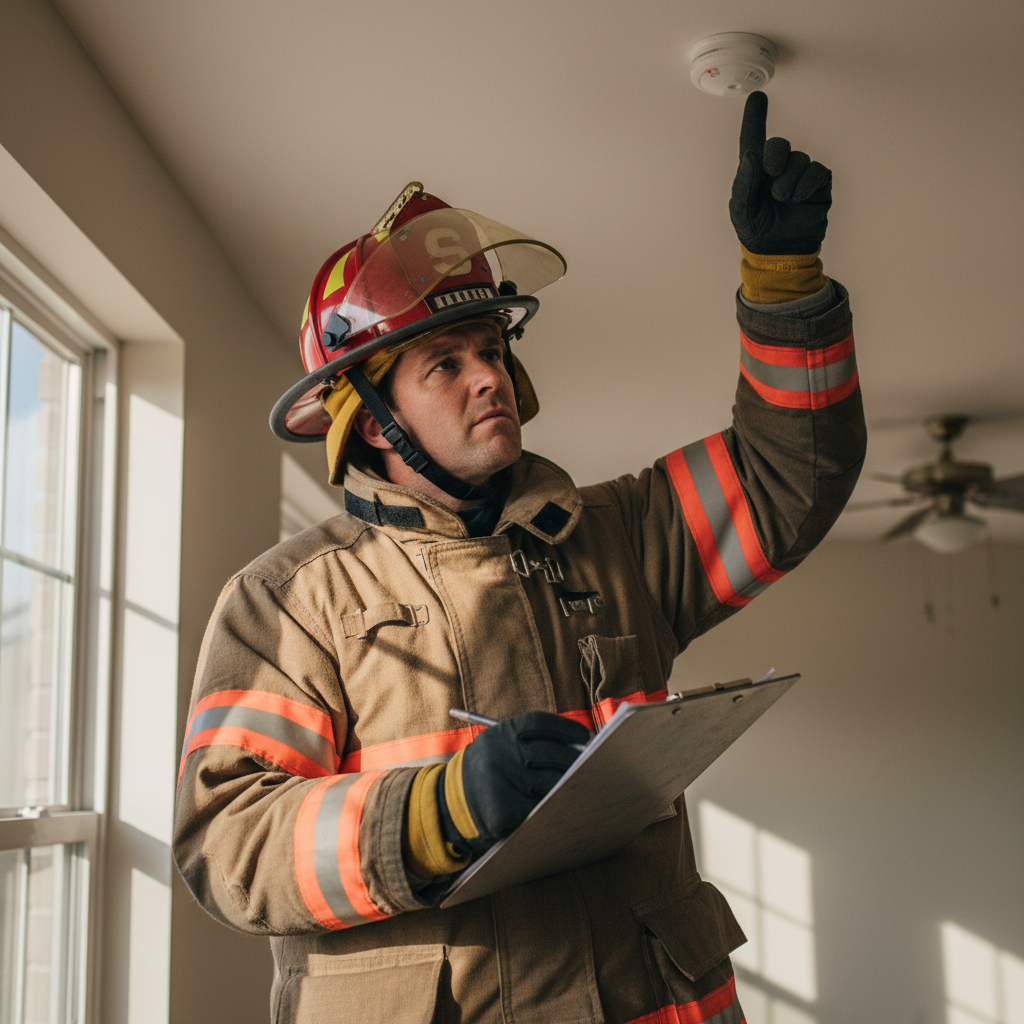
A Station 7 firefighter will visit your home at no cost — test your detectors, walk through your escape plan, and answer any questions. Takes about 20 minutes.
We prioritize elderly residents, homes with young children, and addresses flagged by the checklist. All visits are free regardless.